Writing
AI, work, and human responsibility.
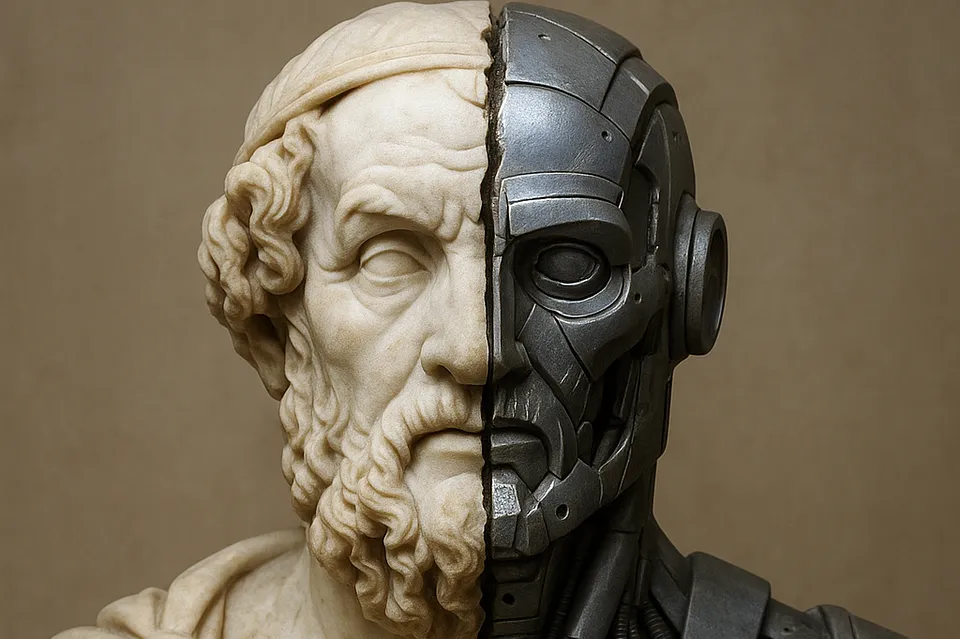
Change is continuous. Evolution flows in front of our eyes whether we like it or not — in how we work, how we spend our free time, what we expect from the systems around us. Right now, the challenge has a name: a new generation of AI tools that are quietly rewriting assumptions we thought were stable.
But no technological transition has ever settled without confronting a radical social shift. Because, in the end, it is people who use technologies, who integrate with them, who decide what to keep and what to leave behind. The tools change fast. The people who use them change differently — slower, more resistant, more deeply.
I decided to stay current. Not as a spectator, but as someone who navigates these changes every day — at work, in the tools I build, in the stories I write. What I find, I share: reflections, observations, contradictions. Not because I have answers, but because thinking in public is itself a form of growth — and because moving forward together is the only version of progress that actually holds.